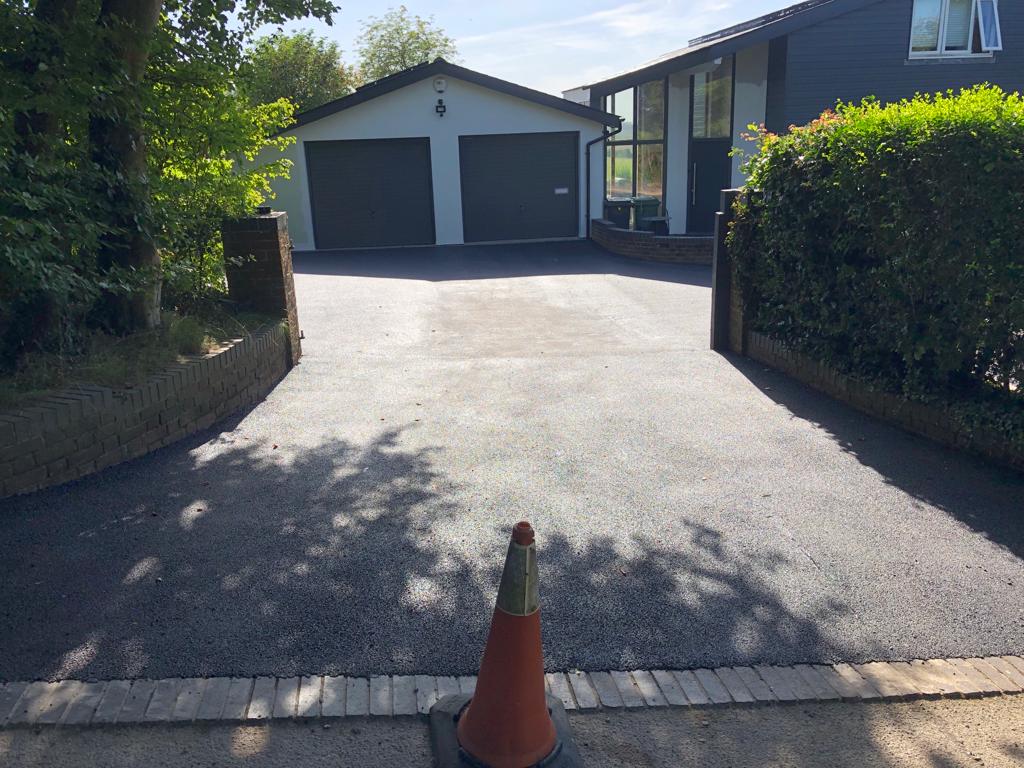
A good asphalt driveway should provide smooth, predictable access to your property. Because surface deterioration often develops gradually, however, you may notice a change in how the driveway feels to drive on before the damage looks particularly serious. Small bumps, vibrations, dips or rough patches can all indicate that the pavement is beginning to lose its original condition.
For property owners in McLaren Vale, SA, a driveway becoming noticeably rougher is worth investigating. The cause may be limited surface wear that can be repaired, or it may indicate that deterioration is developing deeper within the pavement. Identifying the difference early can help preserve more of the existing driveway and prevent minor defects from becoming widespread.
Why Does an Asphalt Driveway Become Rough?
Asphalt is designed to cope with regular vehicle movements, but it is continually exposed to traffic, sunlight, water and changing conditions. Over time, the combination of these factors can affect the surface.
A rougher driving experience may result from:
- Surface aggregate becoming exposed or loose
- Small cracks beginning to deteriorate
- Localised potholes forming
- Depressions developing in the pavement
- Edges starting to break away
- Movement within the underlying base
The important point is that roughness is a symptom. Understanding what is causing it is essential before deciding how the driveway should be restored.
Surface Texture Can Change as Asphalt Ages
New asphalt has a relatively smooth and consistent finish. As the pavement ages, the bitumen binder gradually changes through exposure to the environment and ongoing traffic.
The surface can eventually become more open and coarse, with aggregate increasingly noticeable under vehicle tyres. In some areas, small particles may begin working loose.
This does not necessarily mean the entire driveway has failed, but it can be an early indication that the surface should be professionally assessed.
Small Cracks Can Affect Driving Quality
A narrow crack may initially have little effect on vehicle movement. Once the edges begin breaking down, however, the damaged section can become increasingly noticeable.
Cracks also provide pathways for water to enter the pavement. If moisture reaches the supporting layers beneath the asphalt, deterioration can accelerate.
Repairing suitable cracks while they remain relatively minor can help prevent the surrounding asphalt from breaking away and becoming rougher.
Potholes Rarely Appear Suddenly
Potholes are one of the most obvious causes of an uncomfortable driveway, but they usually develop from earlier pavement weaknesses.
A typical progression can involve:
- A crack or weak area develops.
- Water enters beneath the asphalt.
- The supporting material begins to lose stability.
- Repeated vehicle movements place pressure on the weakened area.
- Asphalt breaks away and a pothole develops.
Responding to the earlier stages can help prevent a small defect from progressing into a much larger problem.
Look for Dips and Depressions
If your vehicle seems to rise and fall across sections that were previously level, the driveway may have developed depressions or settlement.
These areas are particularly important to investigate when they hold water after rainfall. Ponding can increase moisture exposure and potentially accelerate deterioration around an existing weakness.
A professional assessment can establish whether the problem is limited to the asphalt or originates within the supporting pavement layers.
Rutting Can Indicate Repeated Loading
Ruts are longitudinal depressions that commonly develop along vehicle wheel paths. They can make a driveway noticeably less comfortable to use and may interfere with effective drainage.
Rutting can be associated with several factors, including pavement movement or insufficient support for the loads being carried.
Simply covering significant rutting without understanding its cause may not provide a lasting solution. The underlying condition should be assessed first.
Do Not Ignore Deteriorating Driveway Edges
Asphalt edges can be vulnerable because they may not have the same surrounding support as the central pavement.
Once an edge starts cracking or crumbling, regular vehicle movements can gradually break away more material. This can reduce the usable width of the driveway and contribute to an increasingly uneven driving surface.
Addressing edge deterioration early can help prevent damage from progressing towards the centre of the driveway.
Drainage Has a Major Influence on Asphalt Condition
When investigating a rough driveway, it is important to look at how water behaves across the property.
Warning signs include:
- Water consistently pooling in low spots
- Runoff travelling through damaged areas
- Water collecting along driveway edges
- Erosion beside the pavement
- The same sections repeatedly deteriorating
Good drainage helps protect the foundation beneath the asphalt. Where water management is contributing to pavement problems, addressing it should form part of the overall repair strategy.
Can a Rough Asphalt Driveway Be Repaired?
In many cases, yes. The appropriate treatment depends on the extent and cause of the deterioration.
Localised repairs may be suitable where the majority of the driveway remains structurally sound. Individual potholes, damaged edges or isolated areas can potentially be restored without treating the entire surface.
The earlier these problems are addressed, the greater the opportunity to preserve sound sections of the existing driveway.
When Does Resurfacing Become Worth Considering?
If roughness and deterioration have become widespread, continually repairing individual sections may no longer provide the best result.
Asphalt resurfacing may be suitable when the existing pavement has a serviceable underlying structure but the upper surface has become extensively worn.
Resurfacing can provide:
- A smoother driving surface
- More consistent pavement condition
- Improved appearance
- Renewed surface performance
- Additional protection for the existing pavement
The condition of the base must be assessed first because resurfacing cannot correct significant structural failure underneath.
What If the Foundation Is Failing?
Where extensive movement, deep cracking, severe depressions or repeated failures are present, the problem may extend beyond the asphalt surface.
In these situations, sections of the pavement may require more substantial reconstruction before new asphalt is installed.
This is why diagnosing the pavement correctly is more important than simply making it look smooth again. A quality repair should address the cause of the deterioration wherever possible.
Why Professional Assessment Matters
Different types of pavement damage can look similar while having very different causes. An experienced asphalt contractor can assess the complete driveway and consider factors such as:
- Surface condition
- Crack patterns
- Base stability
- Drainage
- Vehicle usage
- Previous repairs
- Areas of settlement
This allows the most appropriate repair, resurfacing or reconstruction approach to be recommended rather than applying the same treatment to every problem.
Conclusion
If your asphalt driveway is becoming rougher to drive on, it may be providing an early warning that deterioration is developing. Cracks, loose surface material, potholes, rutting, depressions and failing edges can all affect driving quality, and some may indicate problems beneath the visible asphalt.
Taking action before deterioration becomes widespread can help preserve more of the existing pavement and restore smoother, more dependable access.
McLaren Vale Road Tech SA provides professional asphalt and bitumen surfacing services throughout McLaren Vale, SA. If your driveway has become rough, uneven or noticeably worn, our experienced team can assess its condition and recommend an appropriate repair or resurfacing solution focused on lasting pavement performance.
Call us on: 08 6727 9106
Click here to find out more about McLaren Vale Road Tech SA
Click here to complete our contact form and see how we can help with your Asphalt and Bitumen Surfacing needs.